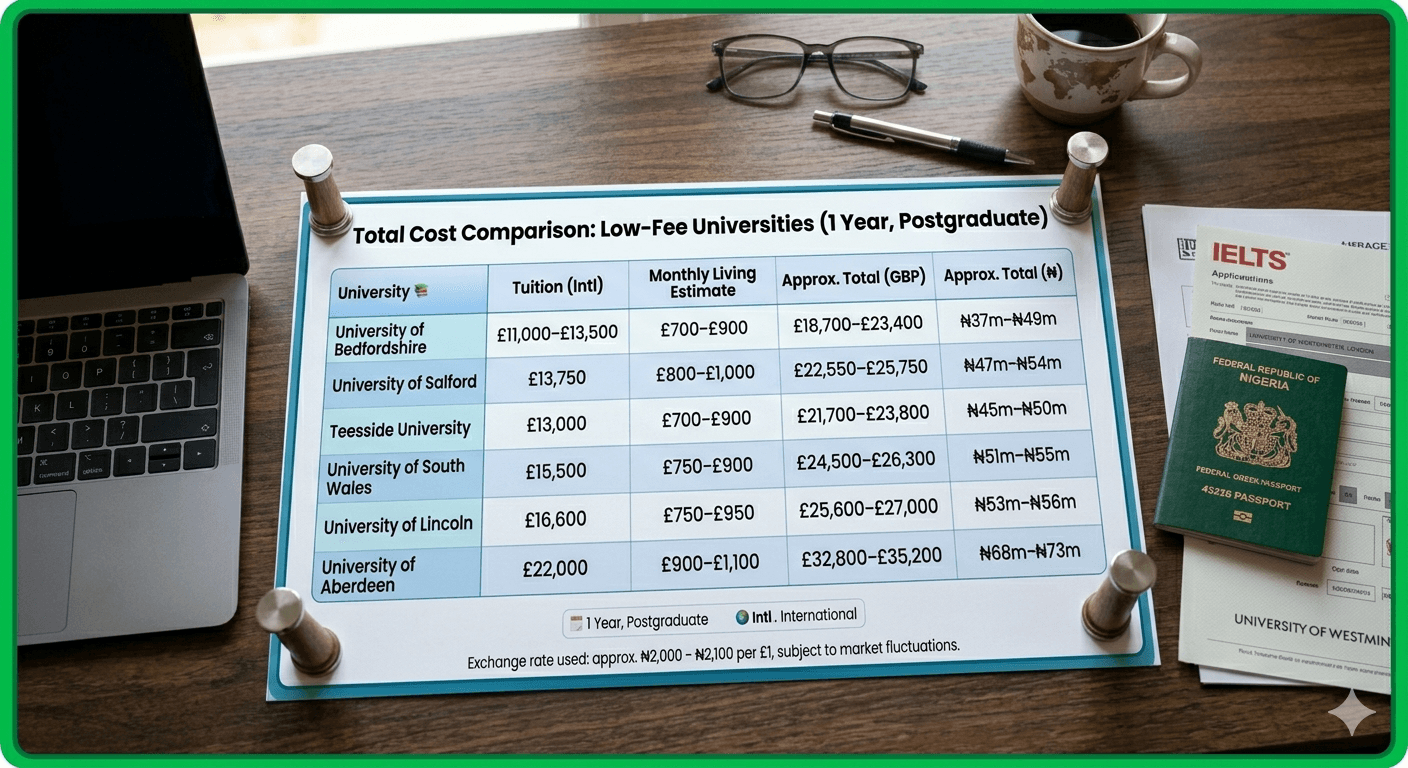
One of the biggest misconceptions Nigerian students have about studying in the UK is that the full tuition fee must be paid before you travel. It does not.
A significant number of UK universities offer instalment payment plans for international students, meaning you pay a deposit to secure your Confirmation of Acceptance for Studies (CAS), then spread the remaining fees across monthly or termly payments once you are enrolled. This changes the financial planning picture completely.
This guide identifies the UK universities with low tuition fees for Nigerian students in 2026, cross-referenced against those that also offer flexible payment structures so you can plan realistically.
Why Instalment Plans Matter for Nigerian Students
For most Nigerian families funding a UK master's degree, the challenge is not the annual cost, it is the timing. UK universities typically ask for a deposit (£4,000–£6,000) to issue the CAS, then the visa requires proof that you can cover the remaining fees.
But "proof of funds" is not the same as "paying all fees upfront." Many universities accept enrolled students onto an instalment plan, meaning:
- You pay the deposit to get your CAS
- You pay remaining fees in instalments (monthly, termly, or in two or three payments)
- You do not need the full year's fees in your account before travelling, you need the deposit plus enough to demonstrate solvency.
This could provide a buffer against unforeseen circumstances in the future.
This distinction matters significantly for families managing liquidity in naira during a period of FX volatility.
Important: Each university's plan differs. Always confirm the terms directly with the university's finance team before you commit.
Universities With Low Fees AND Instalment Plans (2026)
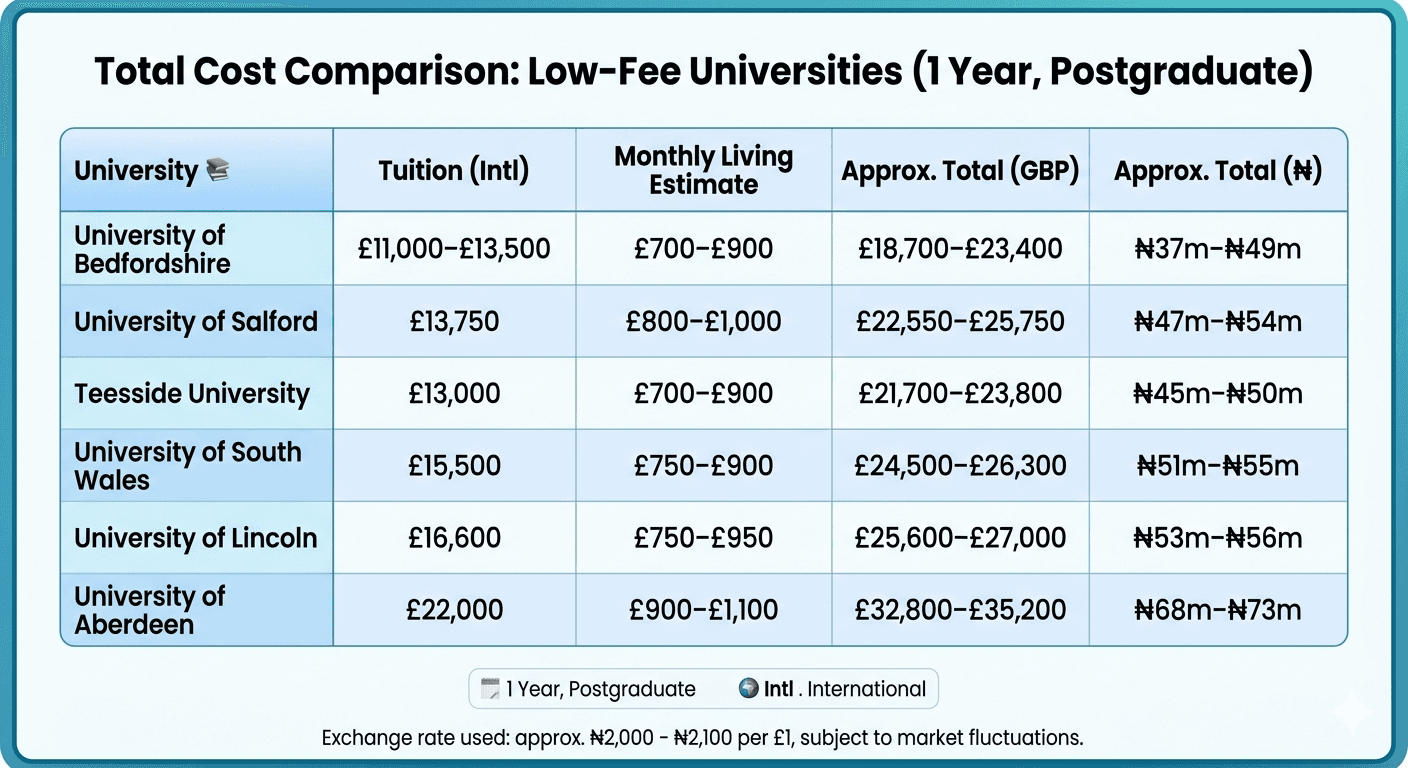
1. University of Lincoln — Fees from £16,600 | Up to 9 Monthly Instalments
International Postgraduate Fees: £16,600–£20,100 per year (2025/26 rates; 2026/27 to be confirmed)
Instalment Structure: Enrolled students can set up a plan with up to 9 consecutive monthly instalments starting from the month of enrolment
Deposit to secure CAS: Standard deposit required (confirm current amount with admissions)
Location: Lincoln, England — a cathedral city with significantly lower living costs than London or Manchester
Popular Courses for Nigerians: MSc Project Management, MSc Business Management, MSc Accounting and Finance, MSc International Business
Lincoln's instalment plan is one of the most generous in the UK — nine monthly payments for a postgraduate year means you are effectively paying tuition as you earn (if working part-time) or in step with when family transfers arrive. Lincoln is not a household name in Lagos the way Manchester or Leeds might be, but its business and management programmes deliver solid outcomes and the low cost of living in the city reduces your total UK spend materially.
🔗 University of Lincoln tuition fees and instalment plans
🔗 Overview: studyinternational.com — UK universities with instalment plans
2. University of Salford — Fees from £13,750 | Instalment Plan Available
International Postgraduate Fees: £13,750–£20,340 per year (2025/26)
Instalment Structure: Enrolled students can arrange payment in instalments; deposit plus 50% arrangement common
Location: Salford (Greater Manchester) — voted second-friendliest city in the world by Time Out 2022
Deposit: £5000 for most international students
Popular Courses: MSc Project Management, MSc Data Science, MSc International Management, MSc Finance, MA Nursing
At £13,750 minimum for a postgraduate programme, Salford is one of the cheapest entry points into UK master's-level education for Nigerian students. The Greater Manchester location is important: the city has a large Nigerian and West African community, lower rents than London (average student room £500–£700/month), and strong graduate employment in tech, creative industries, and financial services.
Salford received the Whatuni Student Choice Award in 2024 as a top 10 UK university for international students.
🔗 University of Salford international students
3. University of South Wales — 50% Deposit, Remainder in Monthly Instalments
International Postgraduate Fees: £15,000–£16,500 per year (estimated 2026/27 further discounts available.)
Instalment Structure: Pay 50% of Year 1 fees to secure enrolment, remaining 50% split into equal monthly payments
Location: Cardiff, Newport, and Pontypridd, Wales
HND Accepted: Yes — for Top up programmes, MSc Management and related programmes
Popular Courses: MSc Management, MSc International Business, MSc Engineering Management, Options in Aviation
South Wales' structure is clear, half on enrolment, half spread monthly. Wales also consistently records lower living costs than England. ScholarshipRegion notes that monthly student expenses in South Wales total approximately £750–£900, compared to £1,000–£1,400 in England. Over a full year, this difference alone saves a Nigerian student approximately £2,400–£6,000 in living costs versus London.
South Wales is also one of few UK universities with a transparent HND acceptance policy, making it doubly useful for Nigerian polytechnic graduates.
4. University of Bedfordshire — Fees from £11,000 | Flexible Plan Available
International Postgraduate Fees: From approximately £11,000–£13,500 per year
Instalment Structure: Flexible plans available for international students (confirm current structure with finance team)
Location: Luton (main campus) and Bedford — commutable to London
Notable: Welcomes students from over 100 countries; strong Nigerian student community
Popular Courses: MSc Human Resource Management, MSc Business Management, MSc Computing, MSc Public Health
The University of Bedfordshire occupies one of the lowest tuition fee brackets among UK universities accepting Nigerian international students — from approximately £11,000 per year for certain postgraduate programmes. The Luton campus is 30 minutes from London St Pancras by train, giving students access to London's work and internship market without London's living costs.
For Nigerian students on tighter budgets, say, a total UK budget of ₦35–40 million for the year — Bedfordshire represents a realistic pathway to a UK master's degree.
🔗 University of Bedfordshire international
5. Teesside University — Fees from £13,000 | International Scholarship Available
International Postgraduate Fees: Approximately £13,000–£16,500 per year
Scholarship: International Scholarship worth up to £1,500 annually — applied automatically for eligible students
Instalment Structure: Flexible plans available (confirm with admissions)
Location: London and Middlesbrough, England
Popular Courses: MSc Project Management, MSc Business with Data Analytics, MSc Cybersecurity, MSc Health Management
Teesside is frequently cited in guides for Nigerian students as among the most affordable UK universities, with fees starting from approximately £13,000. The International Scholarship is applied for eligible students without a separate competitive application. The northeast of England location means rents are among the lowest in the country for international students. The London campus is also highly rated for Tech.
🔗 Teesside University — Cheapest UK universities for Nigerians
6. University of Aberdeen — 50% at Registration, Remainder in Monthly Instalments
International Postgraduate Fees: From £22,000 per year
Instalment Structure: 50% at registration, remaining balance split into three equal consecutive monthly payments due on the 15th of each month
Location: Aberdeen, Scotland
Notable: Oil and gas capital of the UK; exceptional for Nigerian students targeting energy sector careers
Popular Courses for Nigerians: MSc Oil and Gas Engineering Management, MSc International Business, MSc Finance
Aberdeen is more expensive than the universities above — but its location and industry connections make it uniquely relevant for Nigerian students with oil and gas backgrounds or career ambitions in the energy sector. Nigeria and the UK's North Sea oil industries share professional ecosystems. Graduates of Aberdeen's energy management programmes regularly move into roles at Shell, TotalEnergies, and major Nigerian independents.
The instalment structure — 50% upfront, then three monthly payments — is workable for families who can front the first half and manage the rest in naira transfers.
How UK Tuition Instalments Actually Work: Step by Step
Step 1: Receive your conditional offer
The university sends you an offer letter. Read it carefully. It should indicate whether an instalment plan is available and what the deposit amount is.
Step 2: Pay the deposit
The deposit (typically £4,000– above) triggers the CAS, that is the Confirmation of Acceptance for Studies document you need for your visa application. This payment is sometimes non-refundable if you withdraw after a certain date, so ensure to follow up.
Step 3: Apply for your student visa
Your visa application requires you to show funds covering tuition fees plus living costs for the first year (or the first 9 months). Some universities accept a partial tuition figure on the CAS (the instalment amount rather than the full fee) — confirm this with your university before preparing your visa application.
Step 4: Enrol at the university
On arrival, the university enrols you and you set up your instalment plan through the student finance portal. Monthly direct debits or standing order payments are set up from your UK bank account.
Step 5: Open a UK bank account on arrival
Open a bank account immediately on arriving in the UK. Nigerian students in the UK commonly use Monzo, Wise, Barclays (international student account), or Starling. You will need this for instalment payments.
What Else Should You Verify Before Choosing an Instalment Plan University?
1. Does the CAS reflect the deposit or the full tuition fee?
This affects your visa proof-of-funds calculation. Some universities issue CAS for the deposit amount; others issue for the full year. Ask specifically.
2. Is the instalment plan available from your country?
Most instalment plans are available to self-funded international students. Verify that Nigerian students are not excluded from the plan for any reason (some older policies excluded certain nationalities due to historic non-payment rates — this has largely been resolved, but confirm).
3. What happens if you miss an instalment?
Late payments can affect your enrolment status and, in some cases, your visa. Understand the grace period and penalty policy before signing up.
4. Does the university hold a Tier 4 / Student Route sponsor licence?
This is non-negotiable. Verify on the UKVI register of licensed sponsors before applying anywhere.
Helpful Resources
- ScholarshipRegion — UK universities with instalment plans: scholarshipregion.com
- StudyAbroad Nigeria — cheapest UK universities: icanstudent.com
- StudyAbroadly — low deposit universities for Nigerians: studyabroadly.com via BusinessPost Nigeria
- Admission Group LLC — affordable UK universities 2026–27: agl.ac
Final Thoughts
Paying UK tuition in instalments is not a workaround or a sign of financial weakness. It is a standard, documented payment option offered by dozens of UK universities to help international students manage the timing of large fee payments.
For Nigerian families managing FX conversion, the difference between "pay everything upfront" and "pay 50% now, six monthly instalments from September" can be the difference between studying and not studying.
The universities listed in this guide are not second-tier institutions. They are legitimate, UKVI-licensed universities with strong Nigerian student communities, graduate employment records, and programmes that convert into UK work visas and international career opportunities.
The September 2026 intake is approaching. If your budget requires a payment plan, that is not a reason to delay, it is a reason to apply immediately to the institutions above, confirm the plan terms in writing, and get your visa application moving.
Want us to match your budget and course to a university with a confirmed instalment plan? Speak to a Jeropath adviser today.
All tuition fees quoted are for international students as of the 2025/2026 academic year. Fees for 2026/2027 may differ, verify directly with each university. Exchange rates are approximate and subject to market fluctuation. This article does not constitute financial or visa advice.